When an Owner Wants to Build a New System, What Actually Blocks Them Is Rarely the Technology
Most projects don't fail because they're technically impossible. They stall because the solution gets discussed too early, the problem gets defined too late, and the team gets stuck on sequencing, priority, and reaching agreement.
A lot of owners, startup teams, or anyone planning to rebuild a legacy system open with the same line: "I want to build something new."
Some want to redo their website, some want to overhaul their back office, some walk in already talking about implementing AI. On the surface, everyone seems to want something different. But once we actually talk it through, what's blocking them tends to look remarkably similar.
What actually stalls a project is rarely whether the technology is feasible. It's that the problem hasn't been clearly defined yet.
In other words, they think what they're missing is a new system. More often, what's actually happening is: the process is a mess, data is scattered, permissions are unclear, there's too much manual work, and every person on the team is looking at a different pain point.
Why do we always jump into "solution mode" too early?
This is completely normal. When operations get stuck, the instinct is to find a solution fast — as if switching systems, building a new back office, or hiring a dev team will make the problem disappear along with it.
But the issue is: if you haven't yet figured out which part is actually causing the most pain, and you jump straight into discussing feature lists, interfaces, quotes, and timelines, the whole project can go sideways from day one.
That's why so many projects can hold meeting after meeting, with everyone clearly putting in effort, and still end up going in circles. Because one person is talking about brand image, another about technical architecture, another about departmental pain points — and no one has agreed on what the single top priority to solve actually is.
The biggest blocker is that no one has done the prioritizing
If we had to name one core bottleneck, it would be prioritization.
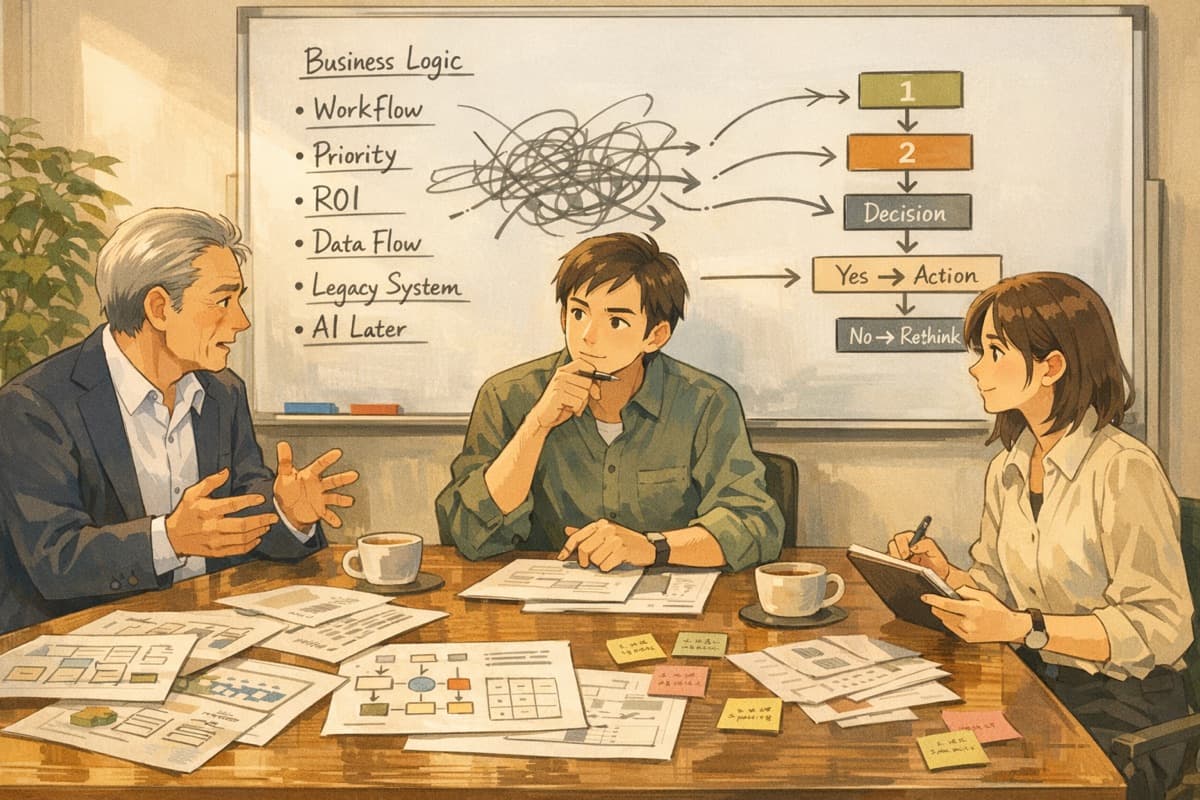
It's not that nothing matters — it's that when everything looks important at once, a team can't actually make a decision. That usually produces one of two outcomes: either scope keeps expanding because everyone wants everything, or nobody dares touch anything because no one knows what's safe to change first.
- The owner knows the business is stuck, but can't say whether it's stuck in order intake, fulfillment, customer service, or data consolidation.
- The team knows the day-to-day is painful, but can't tell whether it's a process design problem or whether the tools themselves have simply stopped being adequate.
- The company wants to adopt AI, but hasn't yet sorted out the basics — data fields, permission logic, exception handling.
When these problems are still tangled together, even the strongest technical team can only guess at answers inside a vague brief.
Three real obstacles owners run into most often
The first obstacle: not knowing where to even start taking inventory.
A lot of people aren't unwilling to invest the effort — they just don't know what data to pull together first, who to loop into a meeting, or which part of the process to start unpacking. Without a framework for that inventory, everyone approaches it from whatever angle they personally know best, and the conversation drifts wider and wider.
The second obstacle: fear of disrupting current operations.
This is especially true for companies that already have customers, orders, and staff running live processes. What they're most afraid of usually isn't budget — it's that changes will make the day-to-day messier than it already is. Without an approach that can be phased, rolled back, and validated step by step, the decision just keeps getting pushed further down the road.
The third obstacle: everything looks urgent at once.
When support is complaining, sales is complaining, finance is complaining, and the owner themselves is frustrated too, every issue starts to feel like an emergency. But what a project actually needs isn't cramming every stakeholder's pain point into version one — it's identifying the single segment that most affects operational efficiency and future growth.
What's actually needed isn't a new system — it's the right starting move
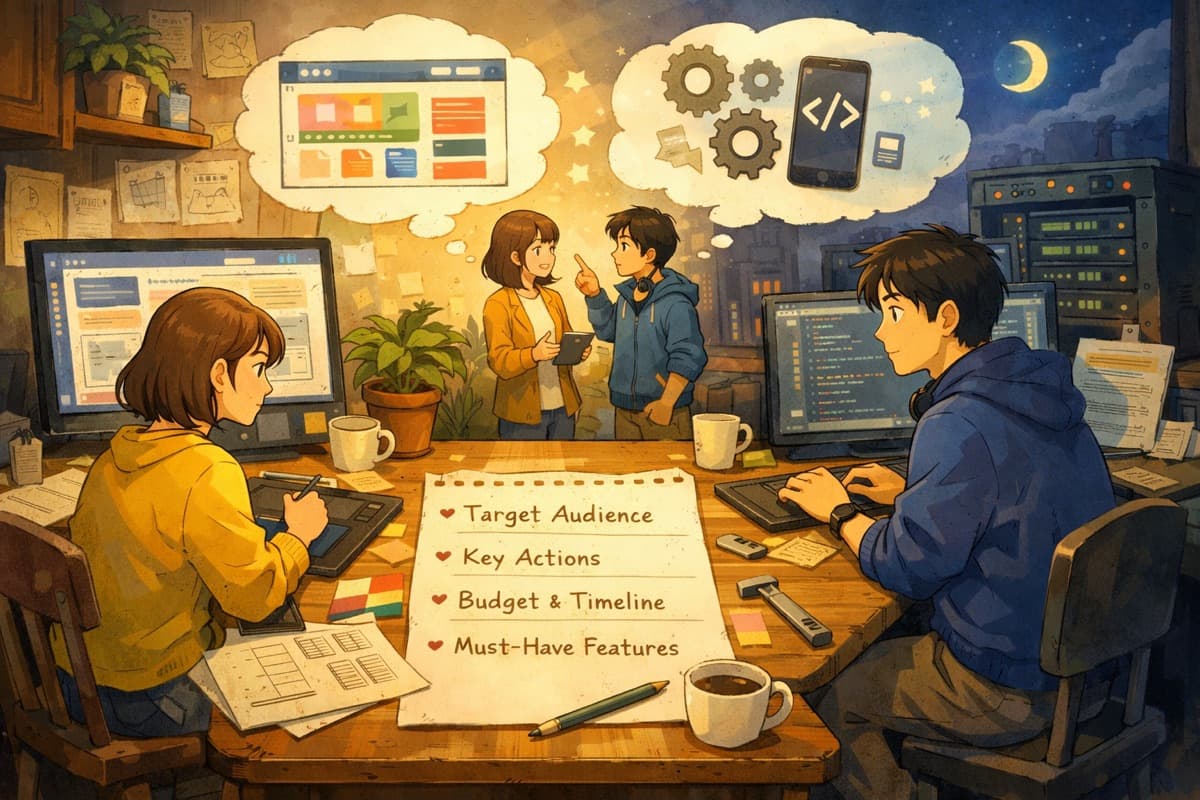
So we typically don't start by asking "what features do you want." We start with more fundamental questions: what operational outcome are you actually trying to improve this time? Which process currently eats the most labor? What data is critical but currently out of reach? If you could only fix one segment right now, which one would have the highest ROI?
Once those questions have real answers, everything downstream moves much faster. Because at that point the conversation isn't the abstract "should we rebuild or not" anymore — it's the concrete "which part do we fix first," "what are we intentionally not touching this round," and "what can wait for the next phase."
A lot of projects don't die from lack of budget. They die from jumping into a solution too early and confronting the actual problem too late.
After all, for a company that's genuinely operating day to day, the most expensive outcome was never the system itself — it's spending a lot of money only to end up swapping the same chaos for a new interface.